

Autheo Layer-0 OS for the Agentic Web | YourFirstApp
Autheo Layer-0 OS for the Agentic Web | YourFirstApp
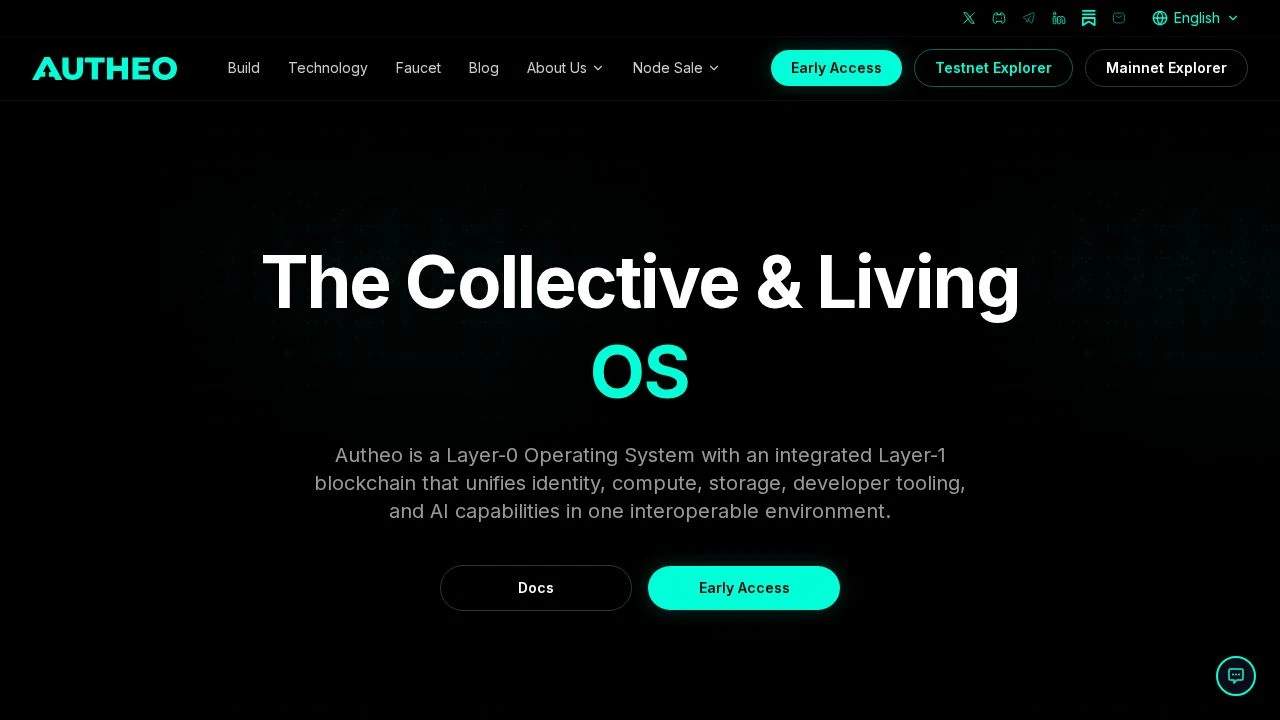
Autheo is a Layer-0 Operating System with an integrated Layer-1 blockchain that unifies identity, compute, storage, developer tooling, and AI capabilities in one interoperable environment. Mainnet is live with staking and transaction fees; additional layers are rolling out.
About
Autheo is a Layer 0 Operating System with an integrated Layer 1 blockchain that unifies identity, compute, storage, developer tooling, and AI capabilities in one interoperable environment. The official site says it is built for explorers, communities, builders, AI agents, agentic commerce, gamers, social networks, creators, enterprise, and what comes next. Mainnet went live on May 14, 2026, with staking and transaction fees operating on chain today. The platform offers a DevHub developer workspace and is developing sovereign identity (TheoID), decentralized compute and storage through the Autheo Marketplace, AI inference (THEO AI), and post quantum cryptography. Access details such as free or paid tiers are not disclosed on the official site. This Layer 0 OS for the agentic web aims.
Quick facts
| Feature | Details |
|---|---|
| Pricing | Not disclosed on the official site |
| Free version limits | Not disclosed on the official site |
| Account required | Not disclosed on the official site |
| Supported platforms | Web (browser-based DevHub) |
| API | Not disclosed on the official site |
| Supported languages | Solidity (EVM-compatible) |
| Mainnet status | Live since May 14, 2026 |
| Native token | THEO (utility coin, not governance) |
Main features
Layer-0 + Layer-1 blockchain foundation
Autheo provides a fast, sovereign blockchain foundation that combines a Layer-0 operating system with an integrated Layer-1 blockchain. The official site states this foundation supports launching chains, apps, and intelligent systems. Developers can deploy Solidity smart contracts using standard tools like Hardhat and Foundry. The platform is designed to reduce the need for piecemeal integrations across multiple vendors.
DevHub native development environment
DevHub is the native workspace for testing, deploying, and scaling projects on Autheo. The official site says it wires up SDKs and documentation in one place. Developers can build now through DevHub, which is live today. Additional platform layers such as TheoID, decentralized compute, and AI inference are rolling out on mainnet over the coming months.
TheoID sovereign identity
TheoID is Autheo's post-quantum secure authentication and sovereignty system for people and digital assets. The official site describes it as a first-class primitive for identity and key-material. It is planned to provide self-sovereign identity and is rolling out on mainnet over the coming months. The official site does not disclose whether TheoID is available for testing on testnet.
THEO AI and agentic commerce
Autheo includes THEO AI for intelligent automation and adaptive workflows, and an Agentic Commerce stack with components like Know Your Agent (KYA), Protocol Router, and Merchant Agent Readiness. The official site says these are designed for agentic applications needing both on-chain settlement and off-chain compute. These features are rolling out on mainnet over the coming months.
How to use
- Visit the Autheo website and navigate to the Build page to access SDKs, RPC, and documentation.
- Use the Testnet Overview page to get the chain ID (21270), RPC details, and faucet for testnet THEO.
- Deploy Solidity smart contracts using standard tools like Hardhat and Foundry, as Autheo is EVM-compatible.
- Use DevHub as the native workspace for testing, deploying, and scaling projects.
- For mainnet, use the Mainnet Explorer to browse blocks, transactions, and contracts.
Pricing
| Plan | Price | Details |
|---|---|---|
| Node Sale | Not disclosed on the official site | Tiered pricing with validator advantages and emission structure |
| THEO token | Not disclosed on the official site | Trading paused; utility coin for staking, fees, and future services |
| Free tier | Not disclosed on the official site | Testnet faucet provides testnet THEO for builders |
| Annual discount | Not disclosed on the official site | Not disclosed on the official site |
Pros and cons
Pros
- Mainnet is live with staking and transaction fees operating on-chain.
- EVM-compatible, allowing deployment of existing Solidity smart contracts.
- Native components for identity, compute, storage, and AI reduce third-party integrations.
Cons
- Many platform layers (TheoID, decentralized compute, AI inference) are still rolling out on mainnet.
- THEO token trading is paused following a security incident.
- Post-quantum cryptography is not yet threaded into the live system.
Who it is for
Autheo is designed for developers building decentralized applications, AI agents, and agentic commerce solutions who want a unified platform instead of integrating multiple third-party services. The official site also lists explorers, communities, gamers, social networks, creators, and enterprise teams as target audiences. Node operators can run a node and earn THEO emissions.
Who it is not for
Autheo is not for users who need a fully mature platform with all features live today, as several core components are still rolling out on mainnet. It is not for those who prefer a DAO-governed system, as THEO is explicitly a utility coin and not a governance token. It is also not for developers who want a platform with quantified performance benchmarks, as those are not yet published.
Autheo alternatives
MadeOnSol
MadeOnSol is a directory of 1,100+ Solana tools across 30 categories, plus real-time KOL trades, deployer intel, and a developer API. Unlike Autheo, which is a Layer-0 OS with an integrated Layer-1 blockchain, MadeOnSol is a tool directory for the Solana ecosystem. Pricing is freemium, and it supports an API. The official site does not disclose whether it offers a free version or its specific pricing tiers.
EvoLink
EvoLink is an AI model API platform providing access to 170+ models from 30+ providers through a single API. It is designed for developers building production apps, agents, and workflows. Unlike Autheo, which focuses on blockchain infrastructure and decentralized AI, EvoLink is a centralized API platform for AI models. Pricing is paid with free credits for new users, and it supports web platforms.
Waver AI
Waver AI is a next-generation AI video generator that turns text and images into high-quality 1080p videos. Unlike Autheo, which is a blockchain OS for decentralized applications, Waver AI is a browser-based video generation tool. Pricing is freemium with a free trial of 10 credits and no credit card required. It supports web platforms and does not require installation.
Frequently asked questions
Is Autheo free?
The official site does not disclose whether Autheo is free or paid. It offers a testnet faucet for testnet THEO tokens, which builders can use for testing. Mainnet usage requires THEO tokens for transaction fees and staking.
Does Autheo have a free version?
The official site does not disclose a free version of Autheo. The testnet provides free testnet THEO tokens via a faucet for development and testing purposes. Mainnet access requires THEO tokens.
Does Autheo add a watermark?
The official site does not mention watermarks. Autheo is a blockchain platform, not a content creation tool, so watermarking is not a relevant feature.
Can I use Autheo commercially?
The official site does not explicitly state commercial use terms. The platform is designed for developers, enterprises, and builders, suggesting commercial use is intended. The official site has terms of service and legal agreements.
Autheo vs Ethereum
Ethereum is a Layer-1 blockchain focused on consensus, settlement, and smart contract execution. Autheo is a Layer-0 OS with an integrated Layer-1 that includes native identity, compute, storage, and AI components. Autheo is also building post-quantum cryptography as a first-class primitive, which Ethereum does not provide natively.
Autheo vs Solana
Solana is a Layer-1 blockchain focused on high throughput and low fees. Autheo is a Layer-0 OS with an integrated Layer-1 that provides native components for identity, compute, storage, and AI. Autheo's post-quantum cryptography is planned as a differentiator that Solana does not provide natively.
What is the THEO coin used for?
THEO is the native utility coin of the Autheo network. It is used for staking validator nodes and paying transaction fees on the Layer-1, which are live today. It is designed to also pay for decentralized compute, storage, and AI inference as those layers roll out on mainnet.
Is Autheo live?
Yes, Autheo mainnet went live on May 14, 2026, with staking and transaction fees operating on-chain. Developers can build now through DevHub. Additional platform layers are rolling out on mainnet over the coming months.
Fact gaps
- The official site does not disclose specific pricing for using the platform or DevHub.
- The official site does not disclose whether there is a free tier or trial for mainnet usage.
- The official site does not disclose quantified performance benchmarks or third-party audit results.
- The official site does not disclose the exact timeline for when all platform layers will be fully live on mainnet.
- The official site does not disclose whether there is an API for programmatic access.
Autheo is a Layer-0 OS for the agentic web that aims to unify blockchain infrastructure, identity, and AI into a single developer platform.